Our Focus
Industrial Real Estate
Canopy focuses exclusively on industrial real estate, operating nationally across primary and secondary markets where institutional liquidity is consistent, with particular depth in the South and Mid-Atlantic regions.
Industrial real estate continues to attract institutional capital for durable reasons: essential function in modern commerce, tenant demand tied to real economic activity, and long-term supply constraints. Transaction outcomes in this sector are shaped less by broad market exposure and more by timing, asset-specific characteristics, and a clear understanding of how facilities fit within supply chains, operating businesses, and institutional portfolios.
By maintaining an exclusive focus, we concentrate on situations where seller intent, asset realities, and institutional underwriting criteria align in a way that supports executable outcomes.
Bulk Distribution
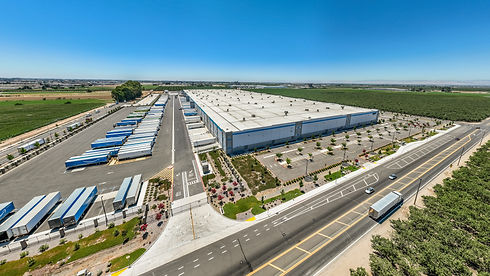
Bulk distribution assets anchor modern logistics networks and are among the most heavily underwritten industrial property types by institutional capital. Value is driven by location, transportation access, and building functionality. Clear heights, dock ratios, trailer parking, column spacing, depth, and expansion capability all determine long-term utility for large-format users.
Demand in this segment is competitive and discretionary. Institutional occupiers prioritize efficiency and network optimization, making assets that fall short on functionality or access vulnerable to obsolescence. Pricing and liquidity track closely with how well a facility aligns with evolving logistics requirements.
Last-Mile Facilities
Last-mile facilities derive value primarily from infill location and population proximity and not idealized building specifications. In dense urban and suburban markets, land scarcity, zoning durability, and access to end consumers take precedence over factors like clear height or building depth.
Transaction outcomes are shaped by population access, ingress and egress, labor availability, and the difficulty of replacing supply. Institutional demand remains strong precisely because new development in these markets is often impractical.


Small / Shallow / Mid-Bay Industrial
Small and mid-bay industrial has attracted growing institutional interest due to steady tenant demand that tends to hold through softer economic periods. These assets serve local and regional businesses whose space requirements are tied to ongoing operations rather than cyclical expansion.
This segment is management-intensive due to higher tenant counts, shorter lease terms, greater turnover. Value is influenced by tenant mix, rollover exposure, lease structure, functional layout, and infill location. Assets that appear similar can trade very differently depending on how these factors interact.
Light Manufacturing
Light manufacturing assets occupy the middle ground between flexible industrial space and purpose-built facilities. Long-term value depends on whether a property's design and infrastructure remain adaptable as tenant needs evolve.
Power availability, floor loads, ventilation, ceiling heights, and specialized improvements all affect reusability. As build-outs grow more tailored, the tenant universe narrows. Tenant credit quality and business stability therefore play a larger role in underwriting than in more fungible asset types.

Heavy Manufacturing
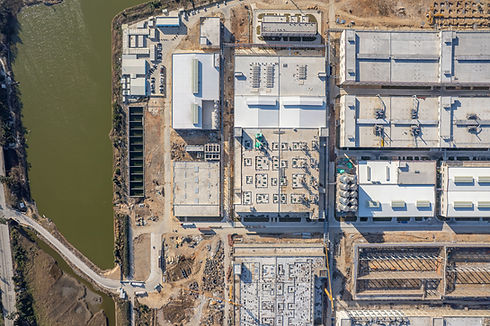
Heavy manufacturing facilities are highly specialized assets where site-specific investment and operational dependency materially shape value. Infrastructure intensity, environmental considerations, and capital replacement costs typically limit alternative use.
As specialization increases, liquidity becomes more closely tied to the occupying tenant than to generalized market demand. Lease structure, remaining term, renewal likelihood, and switching costs are central to any credible valuation.
Industrial Outdoor Storage (IOS)
IOS has emerged as a distinct and increasingly institutional asset class, driven by logistics, transportation, construction, and service-based operations. Value is derived from land utility, zoning, access, and operational permissibility, not building improvements.
Reliable rental data in this segment is often fragmented; the most accurate intelligence is sourced locally. IOS encompasses a range of use types including truck terminals, yard storage, truck parking, low-coverage and higher-coverage sites. Each with different implications for tenant demand, revenue stability, and replacement risk.


Data Centers
Data centers have become one of the most prominent emerging industrial asset classes as demand for AI infrastructure, cloud computing, and digital capacity accelerates. Value is driven less by the physical structure and more by power and water availability, scalability, and redundancy.
In most markets, access to adequate power and the balance sheet strength required to secure utility commitments is the primary gating factor. Pricing and liquidity track closely with infrastructure readiness and the credibility of parties capable of delivering it.
Cold Storage
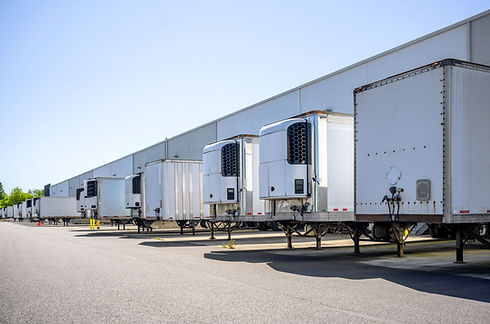
Cold storage facilities are among the most operationally intensive industrial assets, where value is closely tied to functional capability. Tenant demand depends on a facility's ability to support precise requirements: refrigeration systems, temperature zoning, dock configuration, ceiling heights, floor loads, and power redundancy.
Minor system deficiencies can materially affect usability.
These assets are capital-intensive at every stage from construction to maintenance to system replacement. Transaction outcomes are shaped by how accurately system integrity, remaining useful life, and long-term operating viability are understood.